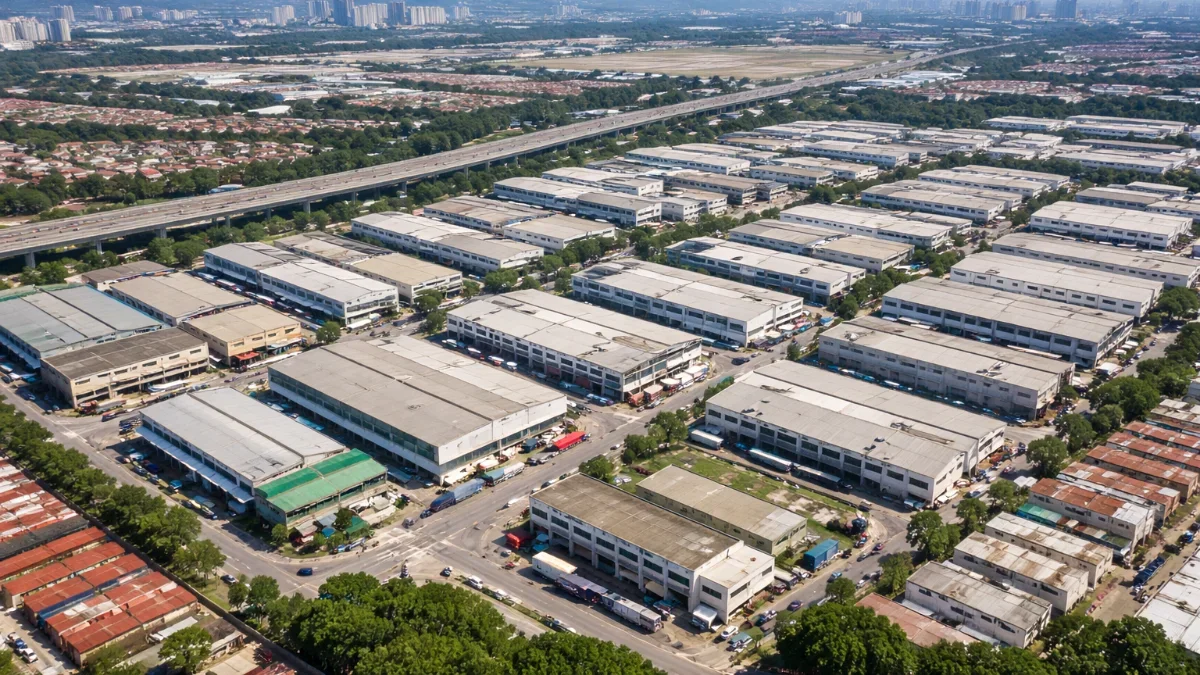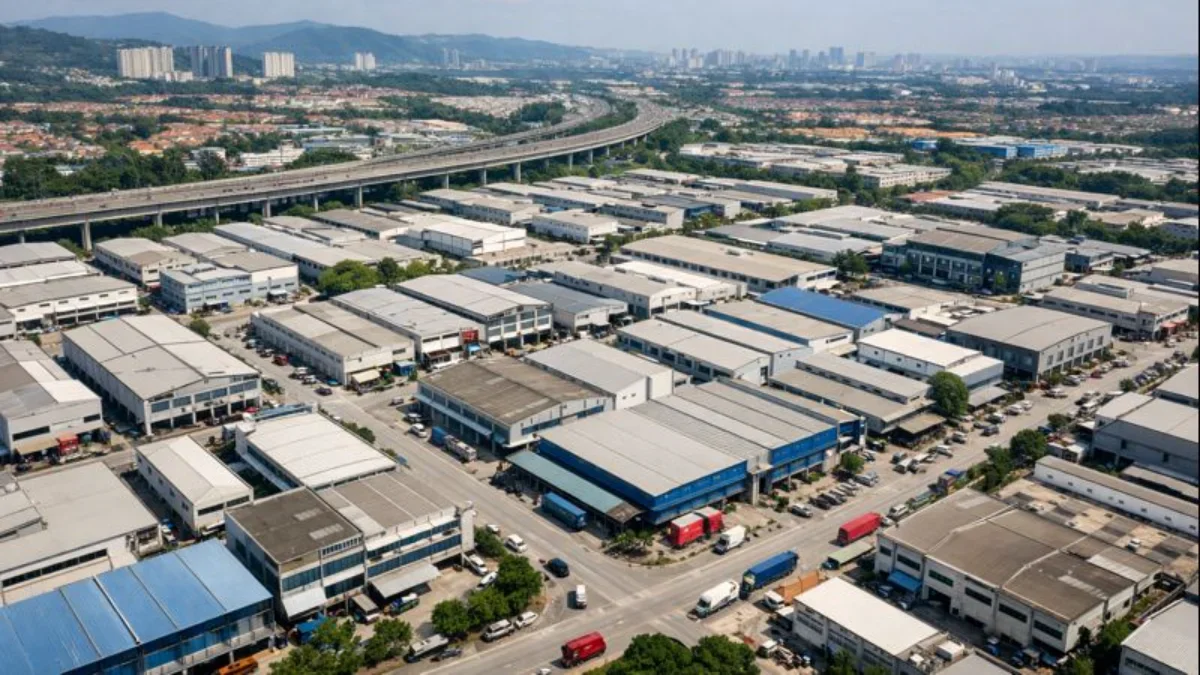
Discover how Puchong Industrial Park evolved from a small township-support industrial area into one of Klang Valley’s most in-demand industrial hubs for factories, warehouses, and SMEs.
The History of Puchong Industrial Park: From Township Support Zone to Klang Valley Industrial Powerhouse
Puchong Industrial Park, is today one of the most established and heavily transacted industrial locations in Klang Valley. Its growth was not accidental—it evolved in tandem with Puchong’s transformation from a peripheral township into a mature urban and commercial centre.
Early Beginnings: Supporting a Growing Township (1990s)
In the early 1990s, Puchong was primarily a residential growth corridor. As townships such as Bandar Puchong Jaya and Puchong Utama expanded, demand grew for:
- Light manufacturing and workshops
- Distribution and storage facilities
- SME-oriented factories serving Klang Valley
Puchong Industrial Park was planned to support these needs, with practical factory layouts, straightforward road networks, and proximity to residential labour pools.
Infrastructure as a Turning Point: The LDP Effect
The completion and upgrading of the Lebuhraya Damansara–Puchong (LDP) marked a major turning point. Improved highway connectivity:
- Shortened travel time to Petaling Jaya, Subang, and Kuala Lumpur
- Improved logistics efficiency for factories and distributors
- Increased land and building values within the industrial park
From this stage onward, Puchong Industrial Park shifted from a local-support role to a regional industrial node.
Expansion & Maturity: The Rise of TPP1–TPP6 (2000s)
As demand intensified, the industrial estate expanded organically through multiple internal road sections, commonly referred to as TPP1 to TPP6. Each phase reflected the era it was built in:
- Earlier phases (TPP1–TPP2): Smaller footprints, high density, strong SME activity
- Mid phases (TPP3–TPP4): Mixed industrial-commercial usage, service-oriented businesses
- Later phases (TPP5–TPP6): Larger layouts, more warehouse and logistics users
This layered development created a diverse industrial ecosystem rarely found in newer single-concept parks.
Evolution of Tenant Profile
Over the decades, tenant composition evolved significantly:
- From basic workshops ? engineering & fabrication
- From small storage ? structured logistics & distribution
- From local SMEs ? regional suppliers and exporters
Today, Puchong Industrial Park hosts a mix of manufacturers, e-commerce logistics, auto-related businesses, food processing, and trading companies.
Why the Industrial Park Remains Relevant Today
Despite its age, Puchong Industrial Park continues to outperform many newer estates due to:
- Strategic central location within Klang Valley
- Immediate access to mature townships and amenities
- Strong labour availability supported by nearby residential areas
- Proven demand with low long-term vacancy for well-maintained units
Investor Perspective: History Creates Stability
From an investment standpoint, the long operational history of Puchong Industrial Park provides:
- Reliable rental demand from SMEs
- Clear resale liquidity due to owner-occupier interest
- Opportunities for value enhancement through refurbishment
Many investors favour older but established industrial estates like Puchong over newer parks due to predictable cash flow and exit clarity.
Looking Ahead: The Next Chapter
While land scarcity limits large-scale expansion, the future of Puchong Industrial Park lies in:
- Upgrading older factories to modern specifications
- Repositioning units for logistics and urban distribution
- Continued demand driven by Puchong’s role as a central business hub
The history of Puchong Industrial Park is ultimately a story of organic growth, infrastructure-driven value, and long-term relevance—making it one of Selangor’s most resilient industrial locations.